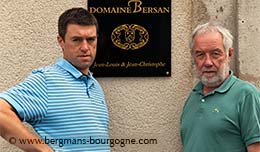

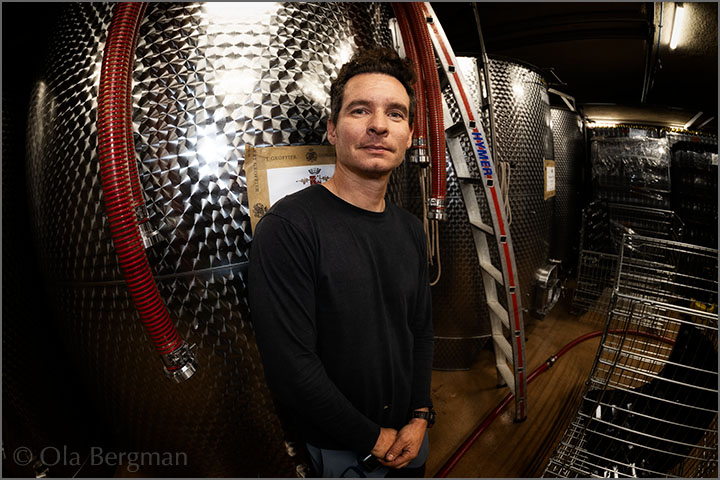
icolas Groffier at Domaine Robert Groffier likes to change things around. Not just a little bit. He split his Chambolle-Musigny premier cru Les Amoureuses into two cuvées. The grand cru Bonnes Mares faced the same destiny. And more recently he has turned some of the vineyards into a new domaine
– I want to play more, but I can’t do that with Domaine Robert Groffier. I need to be free, he explains.
Domaine Robert Groffier is perhaps best known for being the largest owner in Les Amoureuses. With a wine portfolio which also includes both Bonnes Mares and Chambertin-Clos de Bèze, as well as village Gevrey-Chambertin and more Chambolle-Musigny, the domaine covers eight hectares in total.
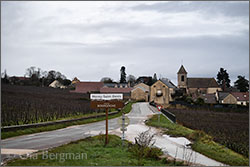
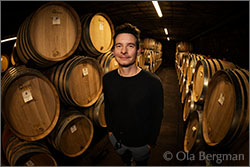
 Nicolas Groffier is lining upp bottles in the tasting room of the domaine, from the regional appellation Bourgogne Passetoutgrain to the illustrious grand crus. Domaine Robert Groffier is located in the very centre of Morey-Saint-Denis, right next to the Clos de Tart premises.
– 2024 was the last vintage for the Bourgogne Passetoutgrain, he says. From 2025 it is Vin de France and it is another domaine, with another philosophy. We split the domaine in two in 2025. Domaine Groffier will keep the best, while Domaine DeCéline will have Vin de France and some lieux-dits and there is a new winery for Domaine DeCéline.
Domaine DeCéline takes its name from Nicolas Groffier’s wife Céline. The élevage is different, all stainless steel. Small tanks and no sulphur. The vineyards all come from Domaine Robert Groffier.
 – We are using the Vin de France classification for the Passetoutgrain, because we have changed so much, and we want to be free to try new things. And also, France, as in Vin de France, is easy to understand for the whole world.
Vin de France is the lowest level in the French wine classification system. This means there are less rules and more freedom for the winemaker. But there is also a twist to the absence of regulations.
– Yes, says Nicolas Groffier with a smile. Within the Vin France you can do pretty much whatever you want. But at the same time it is hard for me to wrap my head around it, because you are totally free. You try to understand, but it is not easy to be free.
– When you are working within an appellation you want to have more freedom and do things differently. But when you are working within the Vin de France framework you want to have the appellation and its rules, because it is difficult for the brain to understand the freedom you have.
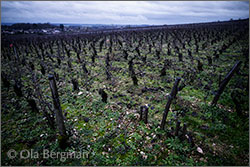 Domaine Robert Groffier will continue as we have come to know it. Parts of the vineyards have been transferred to Domaine DeCéline, but the winemaking philosophy remains intact.
With the Bourgogne Passetoutgrain gone the Domaine Robert Groffier portfolio now starts with the Bourgogne Côte d’Or. This wine comes from a vineyard right below the Clos de Vougeot. The Dijon-Beaune road, the RD974, is the only thing that separates the grand cru from the regional appellation vineyards.
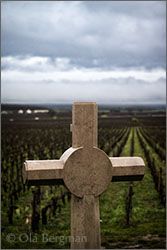 – The Bourgogne Côte d’Or was racked in November. Bottling a month and a half after that. No fining, no filtration. Slight reduction before bottling.
Les Seuvrées is village appellation Gevrey-Chambertin. It is east of the RD974 road, opposite the majority of the vineyards.
– The soil in Les Seuvrées contains lots of sand, says Nicolas Groffier, so it produces a wine which is very different on the nose. In 2024 for instance we only used ten per cent new oak.
There is also quite a lot of sand in Les Sentieres, the Chambolle-Musigny premier cru. But in this case the most sandy part has been transferred to Domaine DeCéline.
– We have one hectare in Les Sentieres, says Nicolas Groffier. 200 metres, 50 rows. There is a lot of clay in the middle. Les Sentieres is clay, iron and sand. It is the sandy part of Les Sentiers which makes up Chambolle-Musigny premier cru Les Croix at Domaine DeCéline.
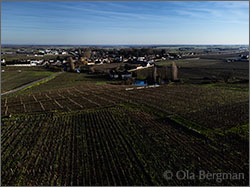 Nicolas Groffier’s first vintage was 2004. His great-grandfather Jules was the one who put together the domaine back in the 1950s.
– 2004 was less ripe. No big yield. But it was a good vintage at the same time, but totally different. Looking back, if I could change anything for the 2004s… With the experience I have today, maybe I would have used whole clusters. That’s my only mistake, but in 2004 whole clusters wasn’t an option…
Right next to Les Amoureuses is another premier cru, far less known. Les Hauts-Doix is rarely seen on labels and Domaine Robert Groffier is likely the only one to use the name regularly.
– I think so, says Nicolas Groffier. There is Maison Drouhin as well, but I think they only use it for Japan, which is totally crazy. We are just three owners in Les Hauts-Doix. There is another branch of our family, who sells to négociants, there is Drouhin and there is us. We own one of the two hectares.
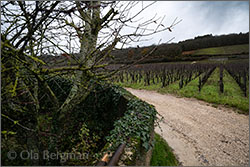 – Les Hauts-Doix is on the northern side of Les Amoureuses. There is sand in the soil. It is mid-slope. You have the light, but it is not warm. The soil is deeper and it doesn’t suffer from the heat as much. The vines are 80 years old. You always have very young flavours in the wine. It is always the easiest to drink. Always good, always easy to understand. It is facing north, but it is the first vineyard we harvest. Every year. Lots of sun, but by 5 pm it ends up in the shade.
Since 2022 the Chambolle-Musigny premier cru Les Amoureuses has been split in two – the La Délicatesse des Sables and the La Grâce des Argiles.
– They are like twins, says Nicolas Groffier. Similar, but still different. Same, but not really the same.
As the names of the cuvées suggest it is the character of the soil that separates them. Argile or sable. Clay or sand. La Grâce des Argiles comes from the Clos de Vougeot side of Les Amoureuses, whereas Délicatesse des Sables comes from the Musigny side.
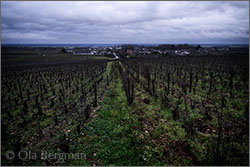 – This change has been well-received, says Nicolas Groffier. People have been excited about it. Before 2022 it was the same vinification for all of Les Amoureuses. It was only one tank. Now we use two tanks, with two vinification processes. Les Amoureuses La Grâce des Argiles is always tight. In tank it hides everything, but after bottling… Wow! It is round, easy. It is velvet. Les Amoureuses Délicatesse des Sables is spiritual, cool and long. You have the gravel, the sand. The north wind, on the north side of Les Amoureuses. More concentration.
The two cuvées of Les Amoureuses age differently. Nicolas Groffier describes La Grâce des Argiles as more of a restaurant wine, a wine which is more approachable in its youth.
– With the second one, you need to have time. You need to take the time. Not many people do that. It is a wine for reflection. It is a wine for the winter. With your wife. Relax. Some wines are for la fête, for celebration. Others are for reflection.
– But no matter if it is clay or sand, it is always Les Amoureuses.
 On the other side of Chambolle-Musigny, towards Morey-Saint-Denis, Domaine Robert Groffier has a chunk of grand cru Bonnes Mares. Not quite one hectare, 0.97 ares. It is in the part of Bonnes Mares close to Morey-Saint-Denis, but not close enough to straddle the Chambolle-Morey border. The rows of Domaine Robert Groffier runs from top to bottom, but not quite all the way. At the top it is cut off by the parcel belonging to Laurent Ponsot and at the bottom by the plot owned by Domaine de la Vougeraie.
In terms of soil Bonnes Mares is not homogenous. The main difference is between the upper – terres blanches – and the lower part – terres rouges. In the upper part the soil is lighter in colour and contains fossilised oysters. Further down the soil is dominated by crinoidal limestone, calcaire à entroques.
– The vines are 80 years old, says Nicolas Groffier. Since 2022 we are making two cuvées – Bonnes Mares and Bonnes Mares, Les Terres Blanches from the top. The latter is only one barrel. We want to explain what Bonnes Mares is. Some people think Bonnes Mares is hard. It is concentrated, but not hard. Concentration doesn’t mean tannins.
The Bonnes Mares of the domaine is not the only grand cru to be split into two cuvées. The same goes for the Chambertin-Clos de Bèze. The 0.42 hectare plot consists of 14 rows from top to bottom, where the top part is being vinified separately and bottled as Chambertin, something which is allowed. Chambertin-Clos de Bèze may be sold as Chambertin, but not the other way around.
– The vines are 110 years old, says Nicolas Groffier. Usually we use 100 per cent new oak, sometimes only 50 per cent. We use the upper part to make some Chambertin. Because it is cooler there. The soil is poor. This is good for a Chambertin. We have been doing it since 2022.
© 2026 Ola Bergman