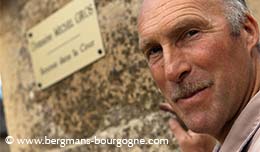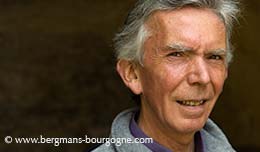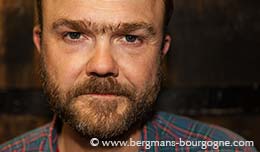

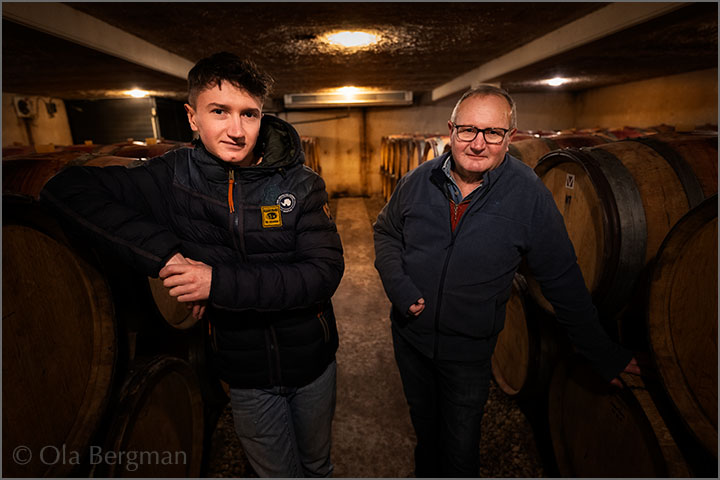
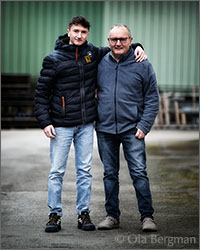
change of generations is underway at Domaine Catherine & Claude Maréchal. With the arrival of Antoine Maréchal in 2022 the domaine now has a father-son team at the helm. Pinot noir is king here. There is some chardonnay. And very little aligoté.
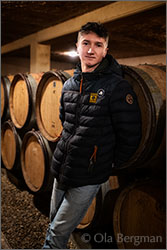
– I did my first vinification with my father in 2022, explains Antoine Maréchal. Then I did an internship in New Zealand the first half of 2023, before I came back here for the remaining part of the season. The following year I went to Australia to vinify. Since mid-April 2024 I am back here full time.
Antoine Maréchal is pouring a glass of Bourgogne blanc at the domaine in Bligny-lès-Beaune. It is a cuvée which bears his name, Cuvée Antoine.
– I was born in 2001, he says. The majority of the vines were planted the same year, so when I arrived in December my parents decided to call it Cuvée Antoine. It is below Pommard. All our whites are in Pommard, except for one parcel which is next to the aligoté, here in Bligny-lès-Beaune.
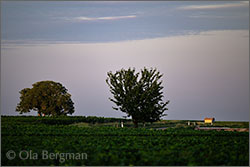 There are only four winegrowers in Bligny-lès-Beaune, despite having close to 1300 inhabitants. The village borders Beaune to the north and Pommard to the west.
– It was quite an easy choice becoming a winegrower, says Antoine Maréchal. I went to the Lycée Viticole in Beaune and finished in 2022. Things became difficult when I lost my mother to cancer. I finished in June and she passed away in July. My father was preparing for the harvest, but I had already planned to return to the domaine.
– That was my first steps into vinification. My father and I discuss a lot, even if we are pretty much agreed on what makes a good wine. So there are no worries for the transfer. I have friends whose parents don’t listen that much. I am lucky to have a domaine in Burgundy to return to and have my father who listens and comes with good advice. With all this I don’t regret my choice.
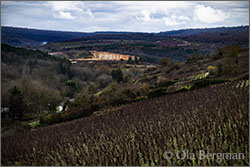 In terms of vineyards Domaine Catherine & Claude Maréchal is centered around Bligny-lès-Beaune and its neighbouring villages – Beaune, Pommard, Volnay, Savigny-lès_Beaune and Chorey-lès-Beaune. The vineyards furthest away are the ones in Auxey-Duresses and Ladoix. In 1980 Claude Maréchal created the domaine with about four hectares. Today it covers 12.5 hectares. In a good year they produce 70 000 bottles.
– It wasn’t exactly planned like this, he says. My parents were farmers and it was suggested that I did the same thing. I realized that the vineyards interested me more than the animals. Also, at the time there was a severe crisis in the wine world. Finding vineyards to buy was easy.
– My brother and I found 20 hectares of vineyards, he continues, something which is unimaginable today. Back then the winegrowers who were retiring didn’t have anyone who wanted to take on the vineyards. I was 16 years old in 1976 when I bought my first vineyard. I was too young so my father had to buy it for me. At the time the price of a vineyard was the gross price of one year’s crop. Today you’ll need five years to pay for the vineyard. And that’s just the lesser appellations. For a grand cru you’ll need close to a century.
 There are only three white wines at Domaine Catherine & Claude Maréchal. Apart from the already mentioned Cuvée Antoine there is also a Bourgogne Aligoté and a village appellation Savigny-lès-Beaune.
– The whites are vinified in fiberglass tanks, says Antoine Maréchal.
– You’ll find the aligoté vineyard in Bligny-lès-Beaune, says Claude Maréchal. It’s the continuity of Pommard. The subsoil is all gravel. Further on you have the lakes. When they built the motorway they took the subsoil there.
The Savigny-lès-Beaune is one single parcel in Les Saucours, which south of the village and just below the motorway, not far from Les Rouvrettes and Les Narbantons. It was up-rooted recently and replanted in 2025.
 – It is facing almost north, says Claude Maréchal. With the climate change this has become an interesting part of Savigny-lès-Beaune, because with this exposure you preserve the acidity.
All reds are vinified in concrete tanks. This, according to Antoine Maréchal, brings a richness to the wine, thanks to the micro-oxidation. All reds are 100 per cent de-stemmed and there is a cool pre-fermentation maceration.
– We are basically trying to make the same wine with all the cuvées, so it is only the terroir that makes a difference, says Antoine Maréchal.
– We use new oak sparingly. We don’t want the wines to be oaky. We are not organic. We are not certified. We are lutte raisonnée, which means we try to avoid using chemicals when possible. We don’t like it, but at times it is necessary for a healthy crop. We don’t use herbicides, instead we plough.
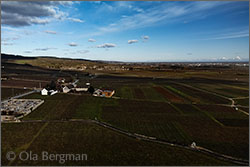 The majority of the vineyards for the red Bourgogne Cote d’Or are in Pommard, at the bottom of the slope, east of the village appellation vineyards. This is also where the soil changes, with more gravel as you move eastward.
– In Ladoix we are in Les Chaillots, which is next to the Aloxe-Corton premier cru Les Petites Lolières. The stones there are from the Tertiary. As the name suggests it is chaille, chert. It is very hard, it defies steel. Then in Chorey-lès-Beaune we have several parcels. One of them is Les Crais, in the southern end of the appellation, where there is a lot of gravel.
 The red village appellation Savigny-lès-Beaune is an old vines cuvée. Grapes from five lieux-dits are used – Les Peuillets, Les Liards, Les Prévaux, Les Pimentiers and Les Planchots. Les Peuillets does have a premier cru part, but this is from the village appellation.
– Many vineyards were replanted after the war, says Claude Maréchal. At the time there were no wine in stock and the vineyards had not been taken care of during the war. There were those who replanted with pinot fin, and there were those who replanted with a pinot that was very productive. So today there are old vines that are very good and there are those who are less good.
 There is not a lot non-premier cru land in Beaune. The village appellation wines are relatively rare. Domaine Catherine & Claude Maréchal produces a Beaune, Les Bons Feuvres, which is at the flatter part at the bottom of the slope, behind the Renault dealer and the Panorama hotel along the Pommard road.
– In Les Bons Feuvres you have red soil, says Claude Maréchal. The word feuvre comes from forgeon, blacksmith. There is iron in the soil. We are just next to Les Epenotes.
There is one village appellation Pommard and one Volnay at the domaine. The Pommard comes from La Chanière, which is on the south-facing slope behind the village along the road to Nantoux. The Volnay comes from young vines, planted in 2019, in Les Petits Gamets. That’s in the flatter part of Volnay, with marly clay, not far from the D974 road.
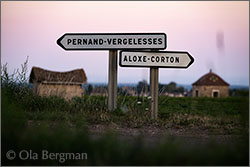
Domaine Catherine & Claude Maréchal only has one premier cru and that is the Savigny-lès-Beaune, Les Lavières, one of the premier crus on the Pernand-Vergelesses side.
– The name comes from laves, the flat stones you find there, says Claude Maréchal. They are limestone laves. And you have some nice clay there as well.
The Auxey-Duresses of the domaine is undergoing a change of colour, from red to white.
– This is a parcel which was uprooted after the 2021 harvest, explains Antoine Maréchal. It has been replanted with chardonnay. As it was in the past. This part of Auxey-Duresses is better suited for white. You have it on your right just as you leave the village towards Saint-Romain.
© 2026 Ola Bergman