
logo_b
Burgundy on FacebookBB on TwitterRSS feed
Email alert

Sign up to receive an email alert for each update on the website.


Privacy policy

Three questions for
Thibault Morey,
Domaine Morey-Coffinet,
Chassagne-Montrachet

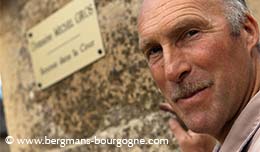
Thibault Morey, Domaine Morey-Coffinet, Chassagne-Montrachet

When it comes to Burgundian wine which is your most memorable experience?
– A 2000 Montrachet from Olivier Leflaive. I had it in 2010 at a very nice meal with friends. It seemed to be at its peak (according to my taste). 2000 is a vintage I particularly like and the style of Olivier Leflaive's wines has always appealed to me. What I felt when drinking this "pearl" is impossible to describe. A Grand Bourgogne is simply beyond words.

In your opinion which is the most overlooked part of Burgundy?
– Auxey-Duresses would without a doubt deserve a bit more attention from media and Burgundy lovers. The whites from Maranges also surprises me more and more, particularly the premier cru La Fussière made by Domaine Bachelet-Monnot.

Speaking of food, what is not to be missed when visiting Burgundy?
– The snails!! With a Chablis Fourchaumes for example. Just talking about them makes me want to have some to eat.

Previously on
Essential Burgundy

Vintage Burgundy

Click to enlarge


Jean-Luc Houblin, Domaine Jean-Luc Houblin, Migé.

Domaine Jean-Luc Houblin:

Building up steam

When Jean-Luc Houblin first began his career as a winegrower the vines around his village only covered a hectare and a half. Today, close to a quarter of a century later, the area under vines in Migé has increased by well over 2000 per cent.

– In 1988 Migé didn't have many vines at all, says Jean-Luc Houblin. Today there are 35 hectares. Five of these are vines still too young for wine production.

Continue – read the whole interview with Jean-Luc Houblin >>>

François Millet and Eric Bourgogne, Domaine Comte Georges de Vogüé

Domaine Comte Georges de Vogüé:

Meet the family

Meet the family, the Chambolle family. At Domaine Comte Georges de Vogüé in Chambolle-Musigny the focus is solely on the wines of the village, well-known names such as Les Amoureuses, Bonnes Mares and Musigny.

– Musigny is the boss, the patriarch, explains winemaker François Millet. Les Amoureuses is the wife, she's the first lady of the village. You have the Chambolle-Musigny premier cru, which is the future boss; not ready today, too young. The village level Chambolle-Musigny is the child of the family. Bonnes Mares is different; it's not the same blood. It's an old uncle, by marriage, from Sweden.

Continue – read the whole interview with François Millet and Eric Bourgogne >>>

Jérôme Galeyrand, Domaine Jérôme Galeyrand

Domaine Galeyrand:

From cheese to wine

It was not planned this way. Jérôme Galeyrand, a cheese wholesaler from the Mayenne in northwest France, arrived at Domaine Alain Burguet in Gevrey-Chambertin and soon after that decided to go for a career change. After wine school in Beaune he quickly established himself as a up and coming producer.

– In January 2002 I began looking for vines to take on. My first parcel was Les Retraits in Comblanchien, appellation Côte de Nuits-Villages. I would use the weekends to work there with my friends from wine school, says Jérôme Galeyrand.

Continue – read the whole interview with Jérôme Galeyrand >>>

Domaine George, Courgis.

Domaine George:

Explosive Chablis

Beauregards, the Chablis premier cru. Today it's part of the vineyards owned by Domaine George, but during the Second World War it was the Germans' shooting range.

– My father bought our Beauregards in 1988 and replanted it in 1989, says David George-Perpiña. Before that there hadn't been much wine-growing there for 50 years. He put together our parcel from acquisitions from five different owners. When he began working in Beauregards he would find many shells. But being a typical Burgundian my father would just pick them up and throw them away.

Continue – read the whole interview with David George-Perpiña >>>

Yannick Jacrot, Domaine Chapelle

Domaine Chapelle:

Organic requires a lot of knowledge

Yannick Jacrot, winemaker at Domaine Chapelle in Santenay, has solid experience of organic viticulture. Throughout his whole career this has been his main focus.

– All domaines where I have worked have been organic, he says. Before converting to organic viticulture there is a lot you need to learn. Many talk about being organic; they plough the vineyards, but they use chemical treatments. If you are going to do it properly you need to take in a lot of knowledge.

– For me organic wine-growing is about caring for the well-being of the vines and respecting the environment. In addition, this respect for the vines provides you with grapes of greater depth and complexity, with higher density and a higher skin to juice ratio.

Continue – read the whole interview with Yannick Jacrot >>>

Grégory Gouges, Domaine Gouges.

Domaine Gouges:

Learning from history, without living in the past

History, Nuits-Saint-Georges and attention to detail - three things that sum up Domaine Gouges. Four generations down the line this Nuits-Saint-Georges producer has made surprisingly few changes since the creation of the domaine in the 1920's.

– You can't live in the past, says Grégory Gouges. But you can learn from history, especially if it is a history that have worked well. For us it is very important to stay on this road. It's a road of quality wines, terroir wines, respect for nature and respect for the customer. It is something very honest, and we will continue like this.

Continue – read the whole interview with Grégory Gouges >>>

Sylvain Dussort, Domaine Sylvain Dussort.

Domaine Sylvain Dussort:

Bourgogne blanc – the Meursault way

It may sound modest. Sylvain Dussort's main appellation is Bourgogne blanc. Half of Domaine Sylvain Dussort is made up of this. But when the vines are located around Meursault and in the hands of a skilled winegrower it is a different story.

– Meursault is such a large village, so when the appellations were drawn up the appellation Meursault village ended up quite high on the slope, leaving a lot of very good land for the Bourgogne appellation. Many of my Bourgogne blanc parcels, like En l'Ormeau, Les Pellans, Les Dressolles and Les Grandes Coutures, are bordering on the Meursault appellation, explains Sylvain Dussort.

Continue – read the whole interview with Sylvain Dussort >>>

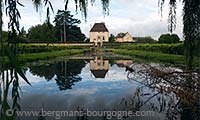
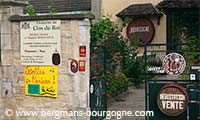
Domaine du Clos du Roi.

Domaine du Clos du Roi:

Pioneers in Coulanges

Coulanges-la-Vineuse in the late 1960's had very little to do with wine. In terms of wine production the village was still recovering from the phylloxera and two world wars. Instead the villages around Auxerre in northwestern Burgundy were focusing on cereals and cherries. But slowly a few people in the area began planting vines. One of them was Michel Bernard at Domaine du Clos du Roi.

– The estate was created by my grandmother and my father in 1969. Coulanges-la-Vineuse has a long history, but 60–70 years ago the vines had almost completely disappeared. My father and a few others started planting and began bottling not so long after that, explains Magali Bernard, daughter of Michel.

Continue – read the whole interview with Magali Bernard >>>

Jean-Michel Chartron - Domaine Jean Chartron

Domaine Jean Chartron:

Saint-Aubin joins the big three

Jean-Michel Chartron at Domaine Jean Chartron in Puligny-Montrachet has a firm grip on his own village. Two grand crus, three premier crus – two of which are monopoles – as well as a chunk of village Puligny-Montrachet. Historically this is where the focus of the domaine has been, but recent years have seen more acquisitions in neighbouring villages.

– Saint-Aubin is very close to Puligny-Montrachet, says Jean-Michel Chartron. The structure of the soil is the same.

– The village used to be in the shadow of Puligny-Montrachet, Chassagne-Montrachet and Meursault. Now it is becoming less and less so. Now I think Saint-Aubin is the the fourth village of top white Burgundy. Saint-Aubin has gained in reputation and there are some lovely domaines in the village now. It's a village where we have already invested and where we will invest more in the future, because the wines are great and the price of land is not as high as in Puligny-Montrachet, Chassagne-Montrachet or Meursault yet.

Continue – read the whole interview with Jean-Michel Chartron >>>